About the lab
What is the Chemical Bond Lab?
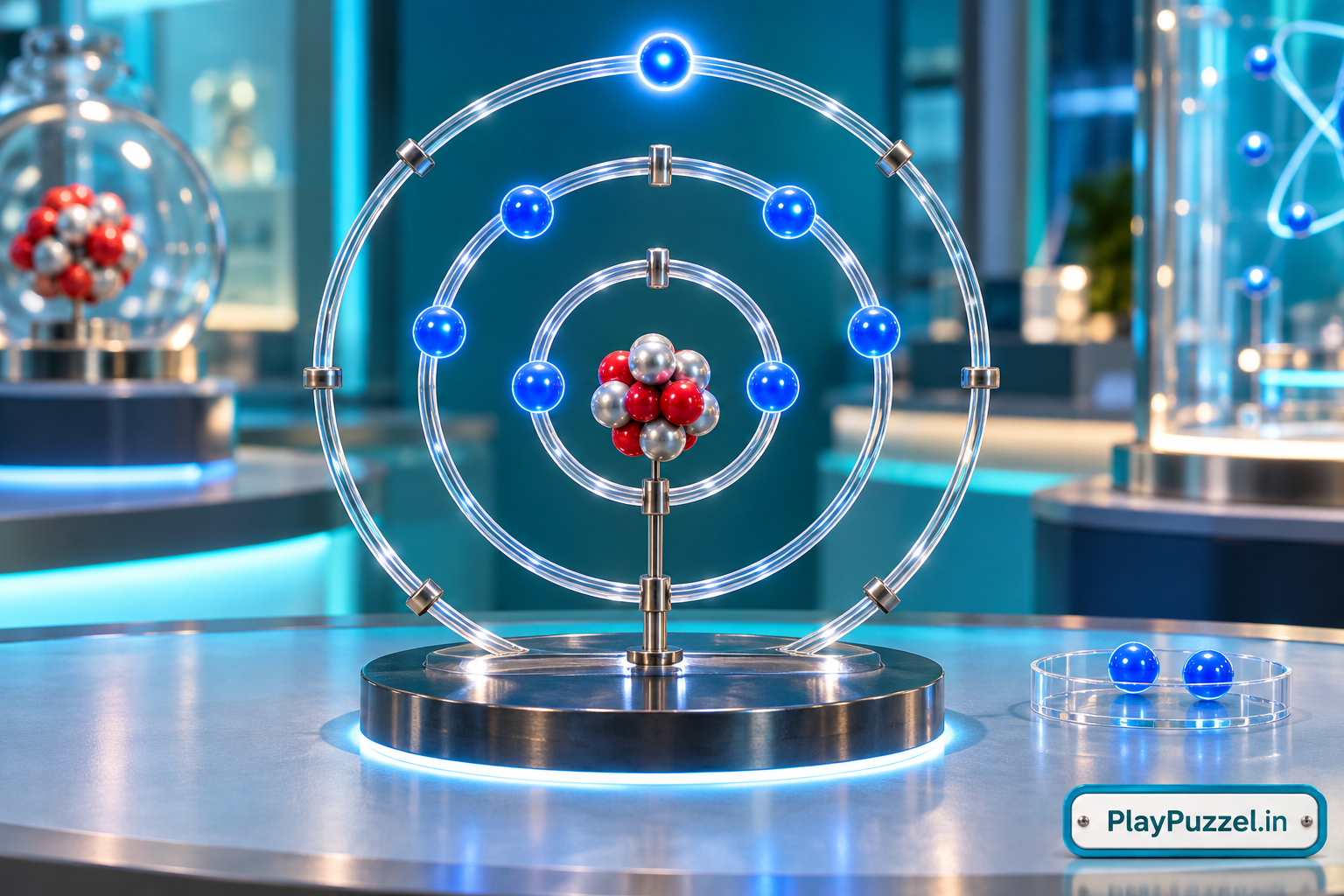
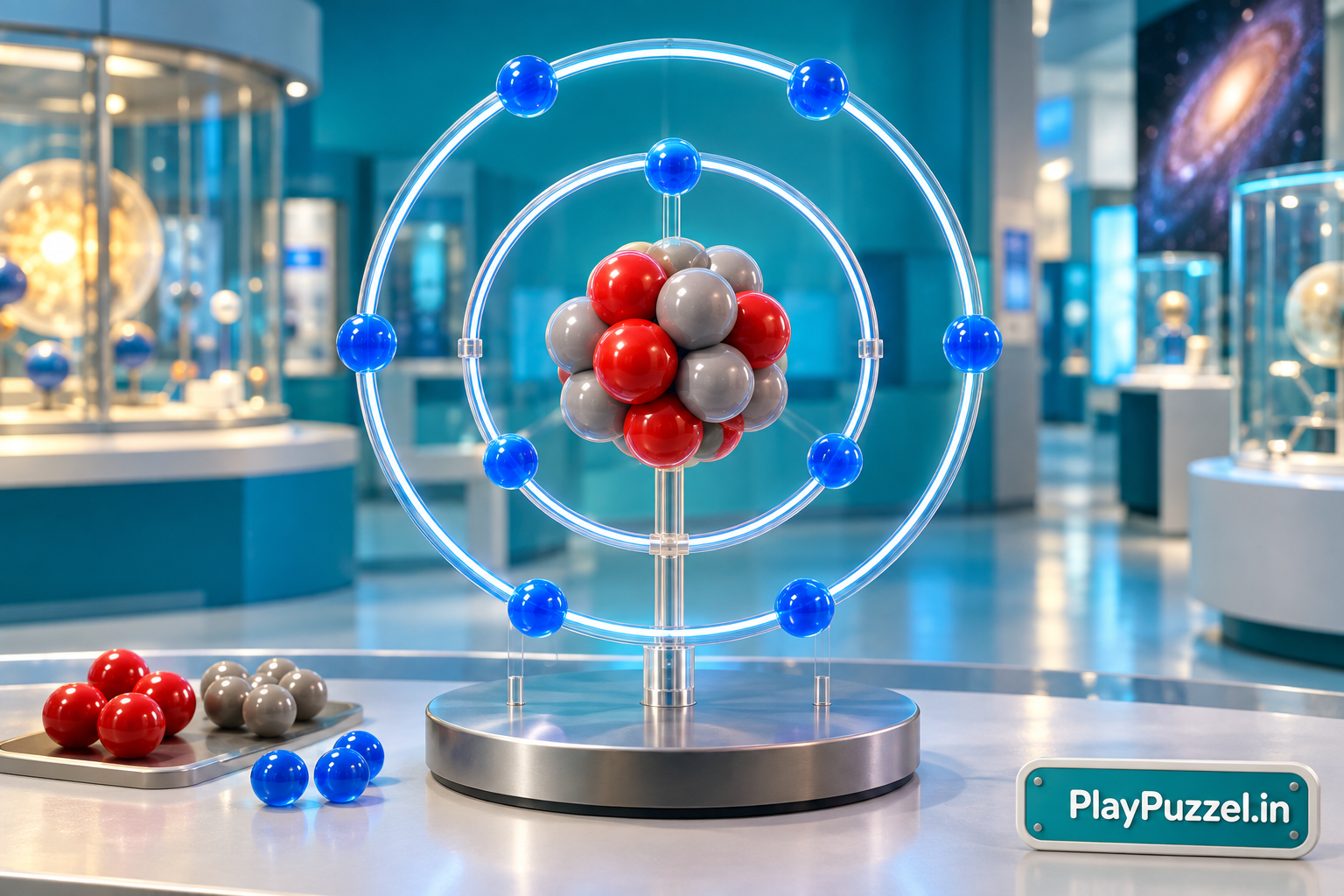
Atoms bond to fill their outer shells. On the Give and take bench, a sodium atom hands its single outer electron to a chlorine atom; both end with a full shell, one becomes positive, the other negative, and the opposite charges hold them together as salt. When the charges do not match, as with magnesium and chlorine, children discover they need a second chlorine atom, and the formula MgCl₂ comes from balancing the charges rather than from memory.
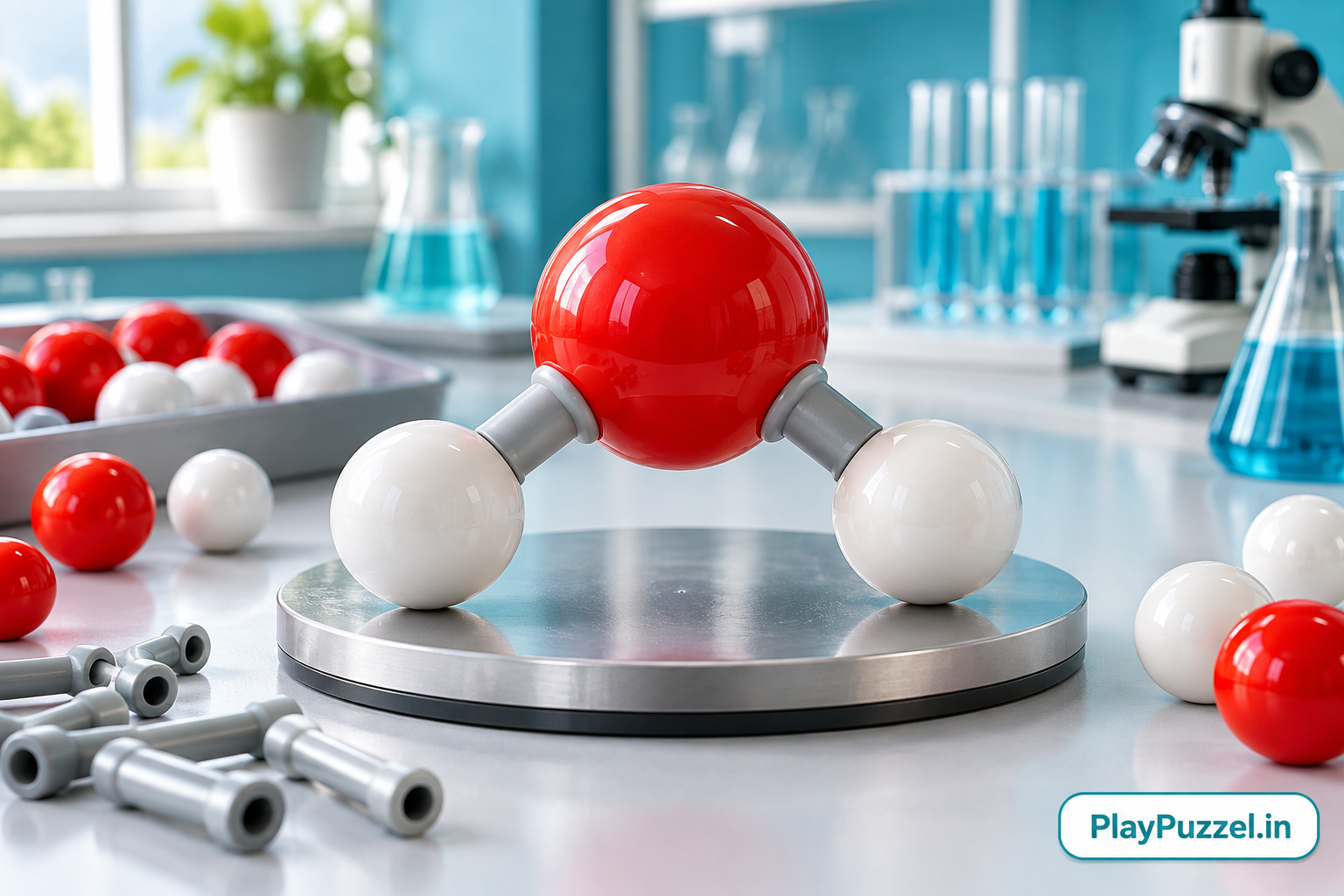
On the Share bench, non-metal atoms share pairs of electrons instead. Each shared pair is drawn between the atoms, so children can count eight electrons round oxygen in water or see the two pairs of a double bond in oxygen gas. The Giant structures bench then puts salt, copper and sugar through three tests: a battery and bulb, a hammer and a beaker of water.
Three levels, from giving and sharing to polarity
Beginners describe bonds as giving, taking and sharing, make salt and water, and light a bulb with copper. Explorers balance ionic formulas such as MgCl₂ and Na₂O, build double and triple bonds, and fill in a results table that explains why salt water conducts but solid salt does not. Advanced learners build aluminium oxide with six electrons on the move, read electron configurations of each ion, and open a fourth bench that uses electronegativity to tell non-polar, polar and ionic bonds apart.
Safe chemistry you can see
Real sodium and chlorine are dangerous, and nobody can watch a single electron move. The lab keeps every experiment on screen and turns the invisible into pictures: electrons fly between shells, ions snap together, and the sea of electrons in copper drifts when the battery is connected. Each result comes with a short explanation written for the child's level.
How it differs from other PlayPuzzle science
Molecule Builder lets children build covalent molecules and spin them in 3D. The Chemical Bond Lab steps back to ask why atoms join at all: it adds ionic and metallic bonding, the electron counting of dot-and-cross diagrams, and the properties that each kind of bond explains. Electron Shells comes first if a child has not yet met outer shells, and Little Scientist Lab suits younger children who want hands-on bench experiments.
Experiments you can try
Beginner, ages 6–8 Free with sign-in
- Make salt
- Share a pair
- Water by sharing
- Magnesium gives two
- Light the bulb
- Hammer the salt
Explorer, ages 9–11 Free with sign-in
- Two chlorines for one magnesium
- Two sodiums for one oxygen
- A double bond
- A triple bond
- Carbon dioxide
- Salty water
- Fill the results table
Advanced, ages 12–14 PlayPuzzle Premium
- Six electrons on the move
- A triple and a single
- An even tug of war
- Who pulls harder?
- Too big to share
How to play
- Choose a bench: Give and take, Share, Giant structures or, at Advanced, Tug of war.
- On Give and take, pick a metal and a non-metal, then tap electrons to move them across.
- On Share, tap atoms to join them, and tap two atoms again to share another pair.
- Test salt, copper and sugar with the battery, the hammer and the water.
- Complete missions such as Make salt and A triple bond to earn stars.
What kids learn
- That atoms bond to fill their outer shells
- That metals give electrons to non-metals and become positive ions in ionic bonding
- That non-metals share pairs of electrons in covalent bonds, including double and triple bonds
- How to work out an ionic formula by balancing the charges
- Why metals conduct and bend, salt shatters and only conducts in water, and sugar does neither
- How electronegativity decides whether a bond is non-polar, polar or ionic
Skills practised
Levels and ages
- Beginner, ages 6–8: Free with sign-in, 6 missions.
- Explorer, ages 9–11: Free with sign-in, 13 missions.
- Advanced, ages 12–14: PlayPuzzle Premium, 18 missions.
Levels are opened by plan and never locked by age, so any child can pick the level that suits them.
Is it safe?
Everything in this lab happens on screen. Sodium and chlorine are dangerous on their own, which is why scientists study them with special equipment and we explore them here.
Frequently asked questions
What age is the Chemical Bond Lab for?
It is written for ages 7 to 14. Beginner talks about giving, taking and sharing electrons; Explorer adds ionic formulas, double and triple bonds and a results table; Advanced adds electron configurations, aluminium oxide and bond polarity.
Is the Chemical Bond Lab free?
It is free with a PlayPuzzle account: signing in opens the Beginner and Explorer levels and saves progress. PlayPuzzle Premium adds the Advanced level and its polarity bench.
What is the difference between an ionic and a covalent bond?
In an ionic bond a metal atom gives electrons to a non-metal atom, and the two charged ions attract. In a covalent bond two non-metal atoms share a pair of electrons. The lab lets children do both and compare them.
Why does salt water conduct electricity when solid salt does not?
Salt is made of charged ions, but in a solid crystal they are locked in place. Water pulls the ions apart so they can move, and moving charges carry the current. The Giant structures bench shows both.
Does the lab show dot-and-cross diagrams?
Yes. The Share bench draws each atom's outer shell and the electrons in it, with shared pairs between the atoms and lone pairs round the outside, so children can count to eight, or two for hydrogen.