About the lab
What is the Experiment Playground?
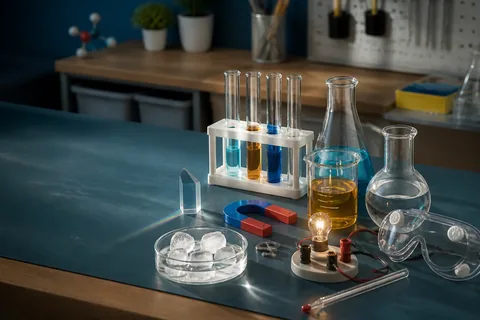
The Playground is free play for curious scientists. It uses the same reaction engine as What Happens If?, but with the whole library on the tray, so reactions from chemistry sit next to magnets attracting iron and red, green and blue light mixing into white. Every new result is added to the child's Discovery Book, which shows how many discoveries are still waiting.
Because nothing is scored, children are free to test their own questions. What happens if you heat sugar? What if you add a magnet to copper? The lab always answers, and when nothing happens it suggests a better idea to try.
Every answer explained
Each result comes with the same notebook as the rest of the Science Lab: what you mixed, what happened, why it happened and where it is seen in real life. At Explorer and Advanced levels the notebook adds formulas, equations and a deeper explanation.
The Playground is also the easiest way into the Science Lab. A child who has never seen a chemical formula can start here, then follow the links to Build an Atom or What Happens If? to learn the ideas behind their discoveries.
Safe by design
The Playground is a closed, virtual world. Children can only combine curated materials, nothing is typed or uploaded, and every result comes from a reviewed reaction or rule. Reactions that are dangerous in real life carry a clear safety note, and the lab never gives instructions for trying them.
Experiments you can try
Beginner, ages 6–8 Free, no sign-in
- Hydrogen + Oxygen + a spark → Water
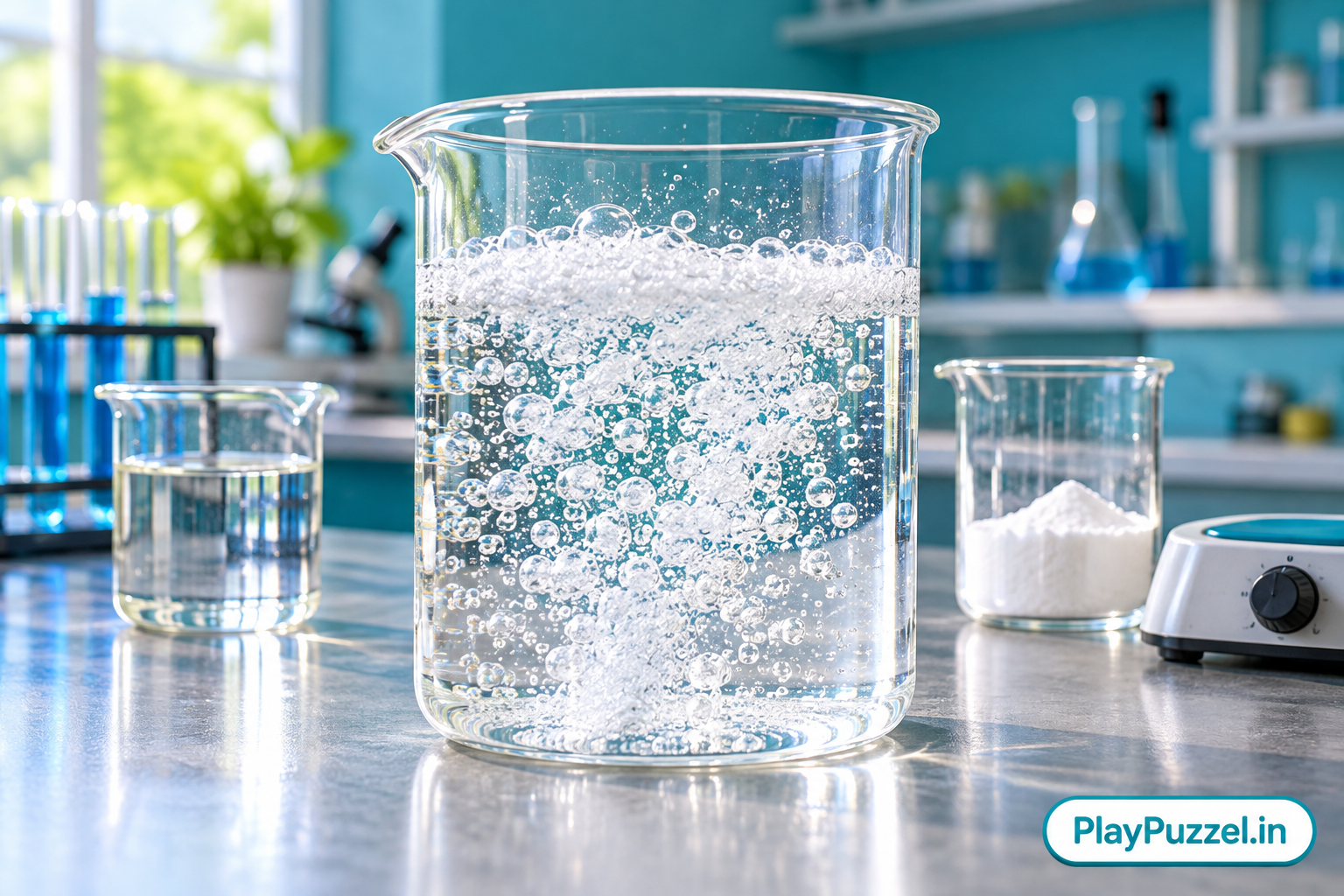
- Baking soda + Vinegar → Sodium acetate + Water + Carbon dioxide
- Baking soda + Lemon juice → Sodium citrate + Water + Carbon dioxide
- Salt + Water → Salt water
- Sugar + Water → Sugar water
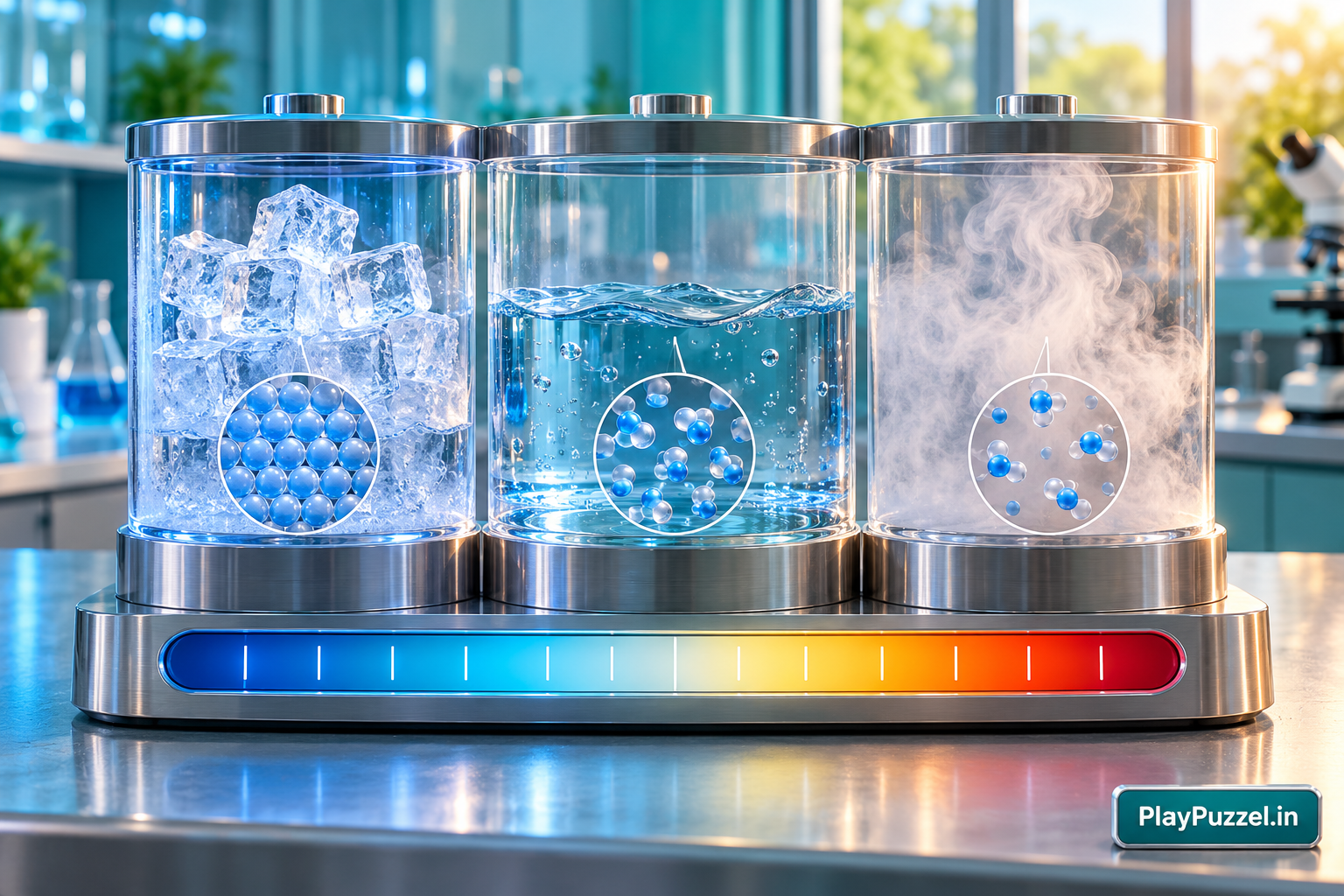
- Ice + heat → Water
- Water + cold → Ice
- Water + heat → Steam
- Steam + cold → Water
- Carbon + Oxygen + heat → Carbon dioxide
- Water + electricity → Hydrogen + Oxygen
- Magnet + Iron → Magnet + Iron
How to play
- Open the Playground: Step 1, the Starter, Kitchen and Water shelves, plays free with no sign-in.
- Drag up to three things from the tray onto the bench, or tap to place them.
- Add a condition such as heat, cold, a spark or light.
- Press Mix and see what happens.
- Ask a grown-up to sign in (it’s free) to open Step 2: the Gases, Magnets, Light and Sound shelves. Premium opens Step 3: Chemicals and Rocks.
- Collect new discoveries in your Discovery Book and try to find them all.
What kids learn
- How to ask a science question and test it
- That some combinations react and others do not, and why
- That magnets attract some metals but not others
- That red, green and blue light mix to make other colours
- That real science keeps notes, just like a Discovery Book
Skills practised
Levels and ages
- Beginner, ages 6–8: Free, no sign-in.
- Explorer, ages 9–11: Free with sign-in.
- Advanced, ages 12–14: PlayPuzzle Premium.
Levels are opened by plan and never locked by age, so any child can pick the level that suits them.
Is it safe?
This is a virtual lab. Many of these reactions are dangerous in real life, so never try them yourself.
Frequently asked questions
What age is the Experiment Playground for?
It suits ages 6 to 14. Younger children enjoy mixing and watching, while older children can switch to Explorer or Advanced for formulas and deeper explanations.
Is the Experiment Playground free?
Step 1 is free with no sign-in: the Starter, Kitchen and Water shelves, as many experiments as you like. A free PlayPuzzle account opens Step 2 (Gases, Magnets, Light and Sound) and saves the Discovery Book. PlayPuzzle Premium opens Step 3 (Chemicals and Rocks) and the Advanced level.
How is it different from What Happens If?
What Happens If? has missions and a chemistry tray. The Playground has no missions and puts every material in the Science Lab on one bench, including magnets and coloured lights.
Can children type in any chemical they like?
No. The Playground only uses curated, reviewed materials, and every result comes from a checked reaction or rule. That keeps it accurate and safe.