About the lab
What is the Photosynthesis Lab?
Plants make their own food. On the Garden bench, children give a bean plant sunlight, water and carbon dioxide and grow it one day at a time. The food it makes each day is set by whichever need is in shortest supply, so turning the water down or the sunlight off has an effect they can see straight away: drooping leaves, a pale plant, no new growth. Over a week the food becomes new leaves.
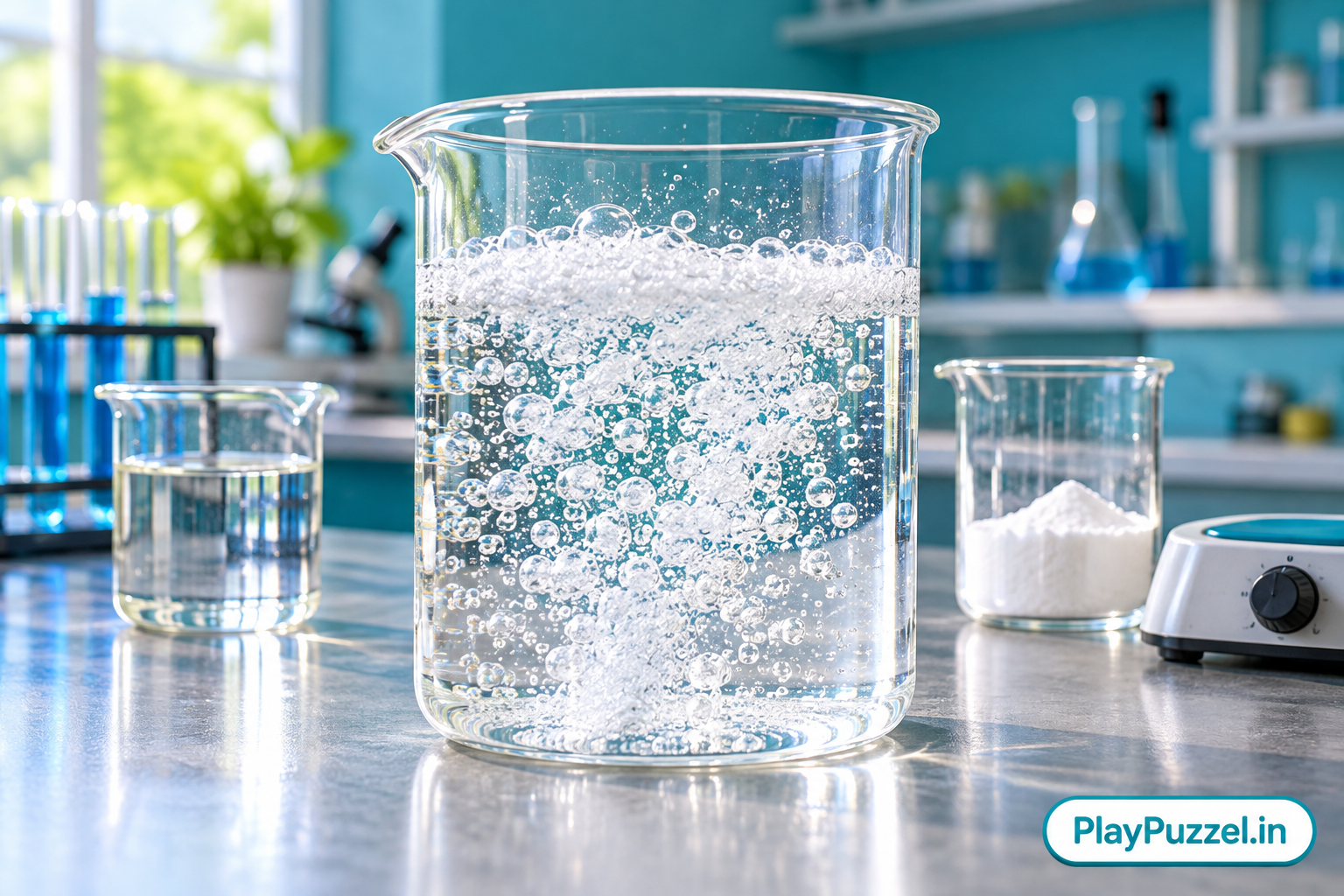
The Bubbles bench is the pondweed experiment from school biology. Children slide a lamp along a ruler and count the oxygen bubbles for a minute; the closer the lamp, the faster the bubbles. Each count goes into a results table, and older children plot the readings on a graph and find the limiting factor.
Three levels, from plant needs to limiting factors
Beginners learn that plants need light, water and air, and that leaves store food as starch. Explorers control carbon dioxide as well as light, take a fair set of readings, compare a leaf with a foil strip and a green-and-white leaf in the starch test, and use hydrogencarbonate indicator to see that leaves take in carbon dioxide in the light and give it out in the dark. Advanced learners add temperature, meet the inverse square law for light, and find the compensation point where photosynthesis and respiration balance.
Real experiments, kept safe and quick
The starch test needs hot liquids and iodine, and the bubble and indicator experiments take a lesson to set up and an hour to show a result. In the lab each one takes seconds and nothing is hot or spilled, so children can repeat a test, change one thing and try again until the pattern is clear. The models are simplified on purpose, and the lab says so.
How it fits with other PlayPuzzle science
Food Chain Adventure starts with plants as producers; Photosynthesis Lab shows how they produce. DNA Builder looks inside living things at the molecule of heredity, and What Happens If? lets children mix carbon dioxide and water with light to see the photosynthesis equation as a chemical reaction.
Experiments you can try
Beginner, ages 6–8 Free, no sign-in
- Make some food
- A thirsty plant
- A day in the dark
- A perfect day
- Grow six leaves
- Count the bubbles
- Lamp far away
- Test a sunny leaf
- A leaf from the dark
- The foil strip
Explorer, ages 9–11 Free with sign-in
- Top speed
- Not enough carbon dioxide
- A fair test
- Green and white
- Every leaf, light and dark
- Turn it purple
- The leaf in the dark
- Why the empty tube?
Advanced, ages 12–14 PlayPuzzle Premium
- Cold water
- The balance point
- Behind the gauze
How to play
- Choose a bench: Garden, Bubbles, Starch test or, from Explorer, Gas exchange.
- On the Garden, set sunlight, water and air, then press Grow a day.
- On Bubbles, move the lamp and press Count for a minute to add a reading to the table.
- In the Starch test, choose a leaf and a sunny or dark day, then test it with iodine.
- In Gas exchange, set the lamp brightness and wait an hour to see each tube change colour.
- Play missions for stars, or explore freely and collect discoveries.
What kids learn
- Plants make their own food from light, water and carbon dioxide.
- Photosynthesis gives out oxygen, which can be seen as bubbles from pondweed.
- Leaves store food as starch, which turns iodine blue-black.
- Photosynthesis needs both light and chlorophyll.
- The factor in shortest supply limits the rate of photosynthesis.
- Plants respire all the time, and take in carbon dioxide overall only in enough light.
- How to change one variable at a time and use a control.
Skills practised
Levels and ages
- Beginner, ages 6–8: Free, no sign-in, 10 missions.
- Explorer, ages 9–11: Free with sign-in, 18 missions.
- Advanced, ages 12–14: PlayPuzzle Premium, 21 missions.
Levels are opened by plan and never locked by age, so any child can pick the level that suits them.
Is it safe?
Everything in this lab happens on screen. In a real school lab the starch test uses hot liquids and iodine, so a teacher carries out those steps.
Frequently asked questions
What is photosynthesis, in simple words?
It is how green plants make their own food. Their leaves catch light and use its energy to turn water and carbon dioxide from the air into sugar, giving out oxygen as they do.
Why does pondweed give off bubbles?
Photosynthesis makes oxygen. Under water the oxygen collects into bubbles, so counting the bubbles in a minute shows how fast the plant is photosynthesising.
Why does iodine turn blue-black on a leaf?
Iodine is orange-brown, but it turns blue-black where there is starch. Leaves store the food they make as starch, so a leaf that had light shows blue-black and a leaf kept in the dark does not.
What is a limiting factor?
It is whatever a plant has least of: light, carbon dioxide or warmth. The plant can only photosynthesise as fast as that factor allows, so adding more of anything else makes no difference.
Do plants breathe out carbon dioxide too?
Yes. Plants respire all the time, like animals, and give out carbon dioxide. In bright light they photosynthesise faster than they respire, so overall they take carbon dioxide in.
Is the Photosynthesis Lab free?
Yes. The Beginner level is free with no sign-in. A free account opens the Explorer level and the variegated leaf, and PlayPuzzle Premium opens Advanced.