About the lab
Atoms you can turn round
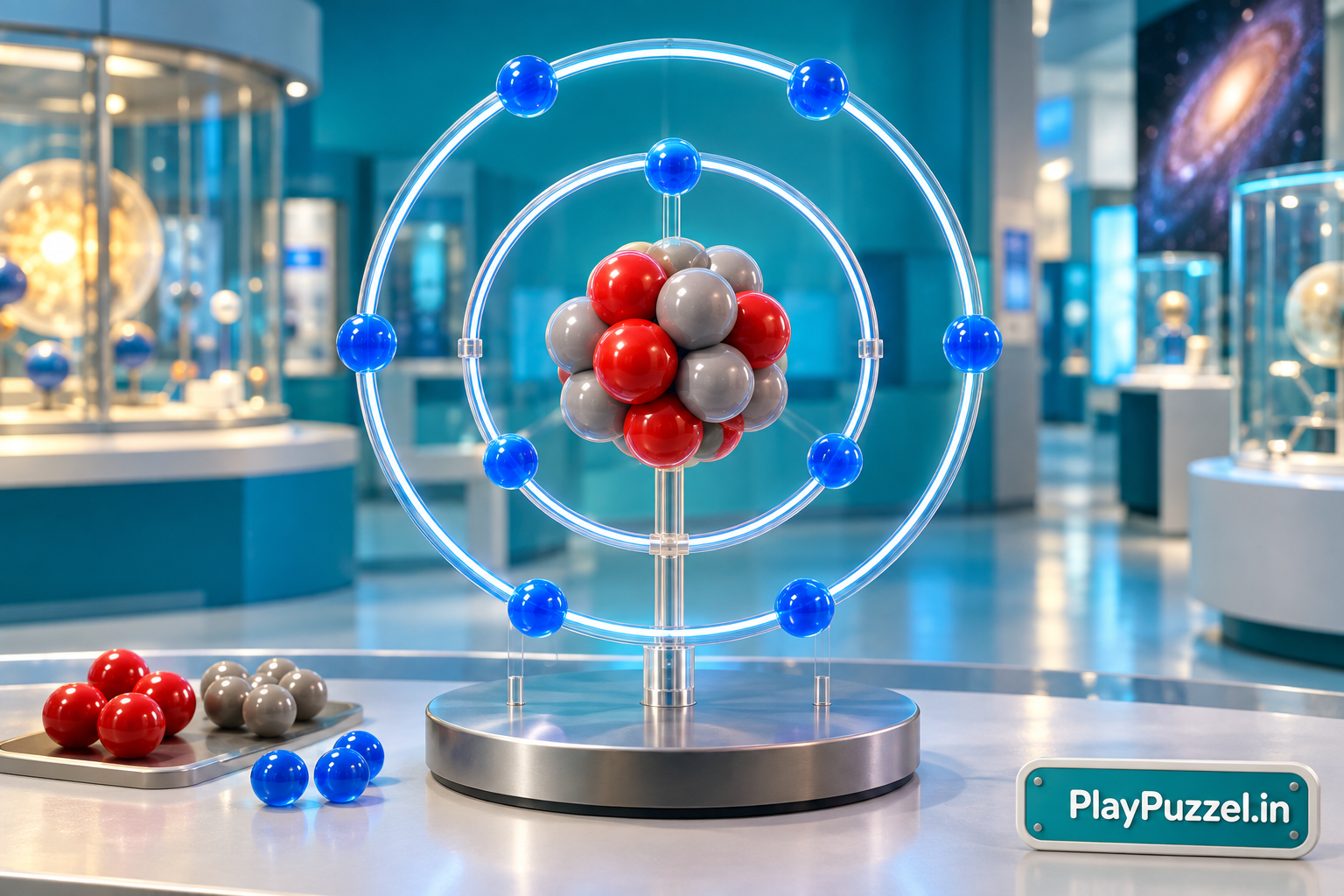
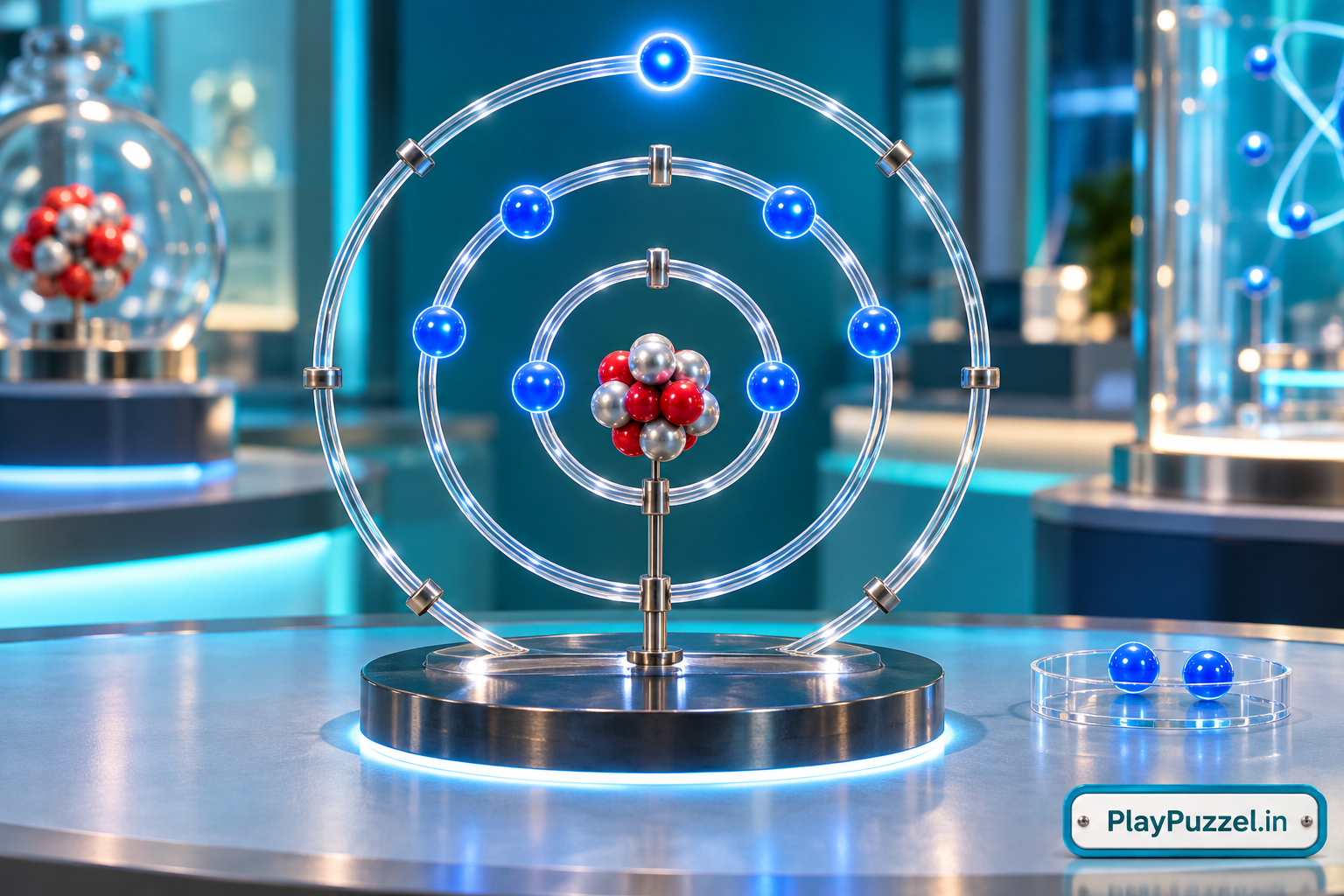
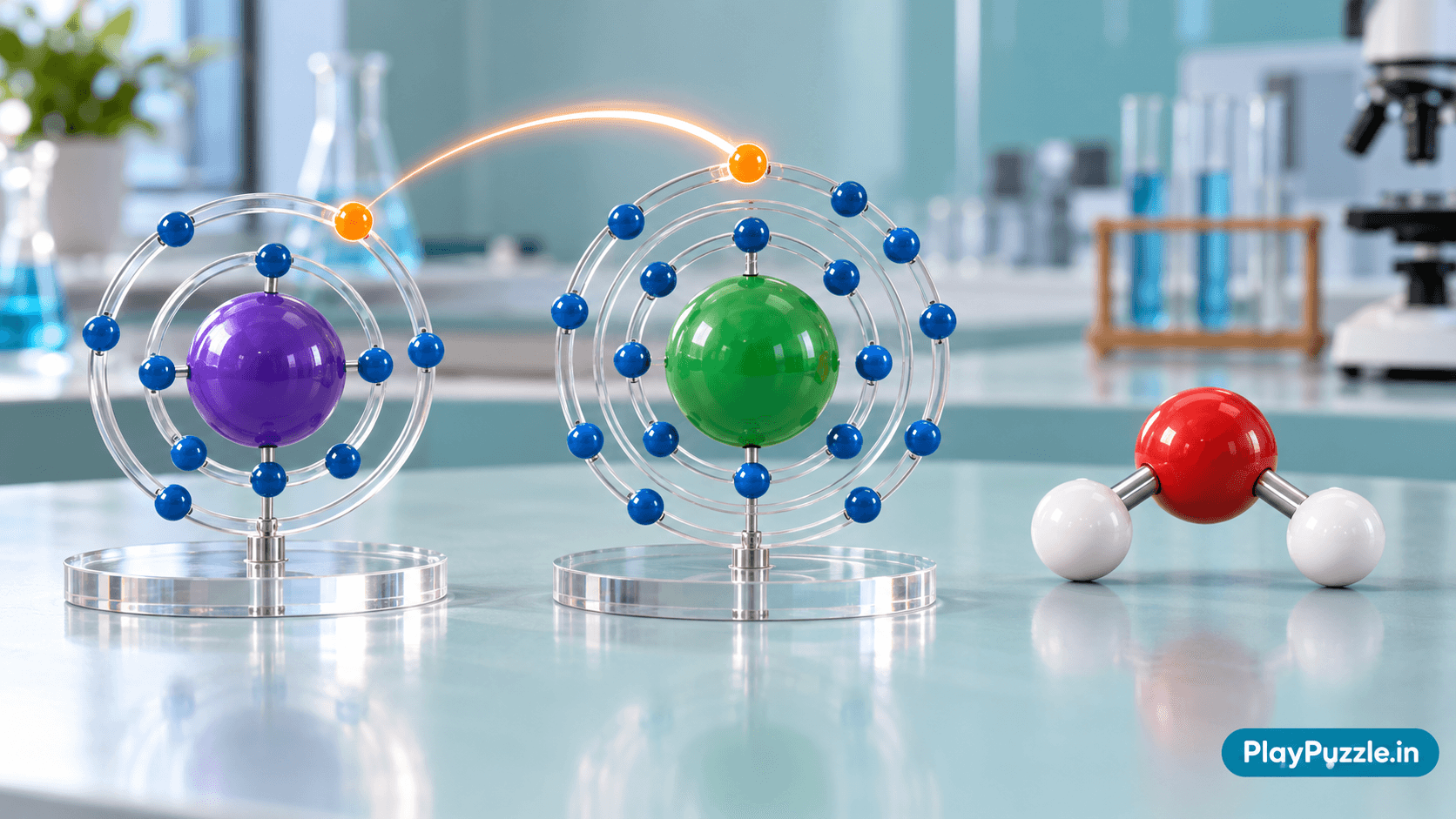
Each element card shows the atomic number, the symbol, the name and the atomic mass, with a model of the atom that children drag to rotate. The nucleus is packed with red protons and grey neutrons, and the electrons sit in shells around it, so the pattern of 2, 8, 8 that underpins chemistry is there to see rather than memorise.
At the top level the card adds full electron configurations, including the famous exceptions like chromium and copper, isotope notation and why some masses appear in brackets.
Families, rows and columns
The table is coloured by family: alkali metals, alkaline earth metals, transition metals, metalloids, non-metals, halogens, noble gases, lanthanides and actinides. Tapping a family in the key lights up its members. Missions ask children to find a noble gas, both liquid elements or every alkali metal, and to notice that elements in the same column behave alike while elements in the same row share the same number of shells.
Elements in everyday things
A phone, a coin, a pencil, a battery, salt, toothpaste and even your own body: the everyday things bench shows which elements are inside each one and what job they do there. Every element, from hydrogen to oganesson, comes with real uses written for children, from lithium batteries to the americium in a smoke alarm.
Experiments you can try
Beginner, ages 6–8 Free, no sign-in
- Meet number 1
- Spin an atom
- Find a calm gas
- Treasure hunt
- Inside a phone
- Element explorer
Explorer, ages 9–11 Free with sign-in
- The reactive column
- Liquid mystery
- Heavy metal
- Along a row
- Salt makers
- Element detective
Advanced, ages 12–14 PlayPuzzle Premium
- Into the d-block
- The odd one out
- Rare earths
- The surprise in period 5
- Down group 17
- The end of the table
How to play
- Tap any square on the table to open that element's card.
- Drag the atom to spin it, and flip the card to read its uses.
- Search by name, symbol or atomic number to jump to any element.
- Use the Compare bench to put two to four elements side by side.
- Open everyday things to find the elements inside them.
- Try the missions for stars, badges and discoveries.
What kids learn
- What atomic number, symbol and atomic mass mean.
- How protons, neutrons and electrons make up an atom.
- How electrons fill shells, and why that sets an element's place on the table.
- The families of elements and how they behave.
- Periods, groups and blocks, and the trends across them.
- Where elements are used in everyday life.
Skills practised
Levels and ages
- Beginner, ages 6–8: Free, no sign-in, 6 missions.
- Explorer, ages 9–11: Free with sign-in, 6 missions.
- Advanced, ages 12–14: PlayPuzzle Premium, 6 missions.
Levels are opened by plan and never locked by age, so any child can pick the level that suits them.
Is it safe?
Virtual lab only. Some elements are toxic, reactive or radioactive: in real life they stay sealed, labelled and handled only by trained scientists.
Frequently asked questions
How many elements are there?
There are 118 known elements. Elements 1 to 94 are found in nature, and the rest have been made in laboratories, a few atoms at a time.
Is the Periodic Table Lab free?
Yes. The whole table and every element card are free to explore at Beginner level without signing in. A free account unlocks Explorer, and PlayPuzzle Premium unlocks Advanced.
What ages is it for?
Ages 6 to 14. Beginner uses words and pictures, Explorer adds atomic numbers, masses and shells, and Advanced adds electron configurations and isotopes.
Why are some masses in brackets?
Elements with no stable isotope have no standard atomic weight, so the table shows the mass number of a long-lived isotope in brackets instead.
Are the atom models accurate?
They show the real numbers of protons, neutrons and electrons, with electrons arranged in shells. Real electrons do not follow neat circles, which the Advanced level explains with subshells.